
With impressive victories throughout the 2025 election season, progressives hope to carry momentum into the 2026 midterms. But this groundswell of excitement at the prospect of taking back one or both chambers of Congress can’t ignore a looming threat to the political power of one of their most important constituencies — Black voters.
At the direction of President Trump, states are racing to redraw voting maps, claiming that they are on the hunt for partisan advantage, even when evidence shows they are trying to dilute the power of Black and Brown constituents. And a looming ruling by the U.S. Supreme Court could walk back previous wins for voting rights in places like Alabama.
“The increasing ease with which lawmakers can brazenly shut Black people out of the halls of Congress should alarm anyone who understands the history of the South,” said Madison Hollon, program manager of political campaigns for the SPLC Action Fund. “And these undemocratic schemes to siphon political power from Black voters at the federal level mean we need to double down on our efforts to increase Black representation in local government.”
The SPLC Action Fund is doing just that, endorsing local candidates throughout the Deep South who have not only committed to protecting democracy, but have also pledged to address issues of poverty and affordability, mass incarceration, and the spread of hate and extremism. In 2025, Action Fund-backed candidates in Alabama notched important victories in mayoral races in Anniston, Birmingham, Greenville and Newbern. But with their elections behind them, it’s time for these mayors to deliver real results for people, while also navigating the unsteady waters created by a federal government that is failing many communities in Alabama and across the country.
What does Black representation in Alabama politics look like?
According to the U.S. Census Bureau, Alabama ranks sixth among all states and the District of Columbia for Black residents as a share of the population. A little more than a quarter of the state’s residents are Black, while just under two-thirds are white.
Within their federal and state legislative bodies, Alabama’s Black residents are slightly underrepresented. Among the 140 seats in the state legislature, just over 23% are held by Black lawmakers. And the state’s federal congressional delegation, which consists of two senators and seven U.S. representatives, includes only two Black officials: Rep. Terri Sewell and Rep. Shomari Figures.
Are you considering a run for local government in the Deep South? Learn more about how to earn an endorsement from the SPLC Action Fund.
Gaining fairer representation in Congress didn’t come easy for Alabama’s Black residents. In 2022, a federal district court ruled that the state’s congressional voting maps violated the Voting Rights Act, ordering the creation of a second congressional district “in which Black voters either comprise a voting-age majority or something quite close to it.” Lawmakers had split Black voters into multiple districts to ensure that they could have only enough power to elect one representative of their choosing. A decision from the U.S. Supreme Court in 2023 affirmed the ruling, leading to the creation of Alabama’s 2nd District, which is now represented by Rep. Figures.
Unfortunately, the story does not end there. In 2026, the Supreme Court will hand down a decision in Callais v. Louisiana, which could further dismantle the Voting Rights Act. Depending on the ruling, lawmakers could have the green light to gerrymander Black leaders out of power, with the seats held by Rep. Figures and Rep. Sewell as potential targets.
Why is it important to increase Black representation in local politics?
Sometimes, you don’t really know what you had until it’s gone. And this year, many voters are feeling buyer’s remorse from the Trump administration, explained Van Johnson, mayor of Savannah, Georgia, and president of the African American Mayors Association.
“I think there is definitely appreciation, particularly this year, about the importance of local leadership,” he said. “The federal government, in many ways, has become persona non grata and so we’ve had to have mayors of all cities — both big and smaller cities — stepping up and taking on tasks that they may not have had to do before.”
For Johnson, that included running food drives to help residents who were cut off from SNAP benefits. But other mayors are planning to address how cuts to federal funding for such essential services as education, health care and housing could shift a greater burden onto local governments. Those cuts could blow back harshly on the Black community in Alabama, where a quarter of residents live in poverty.
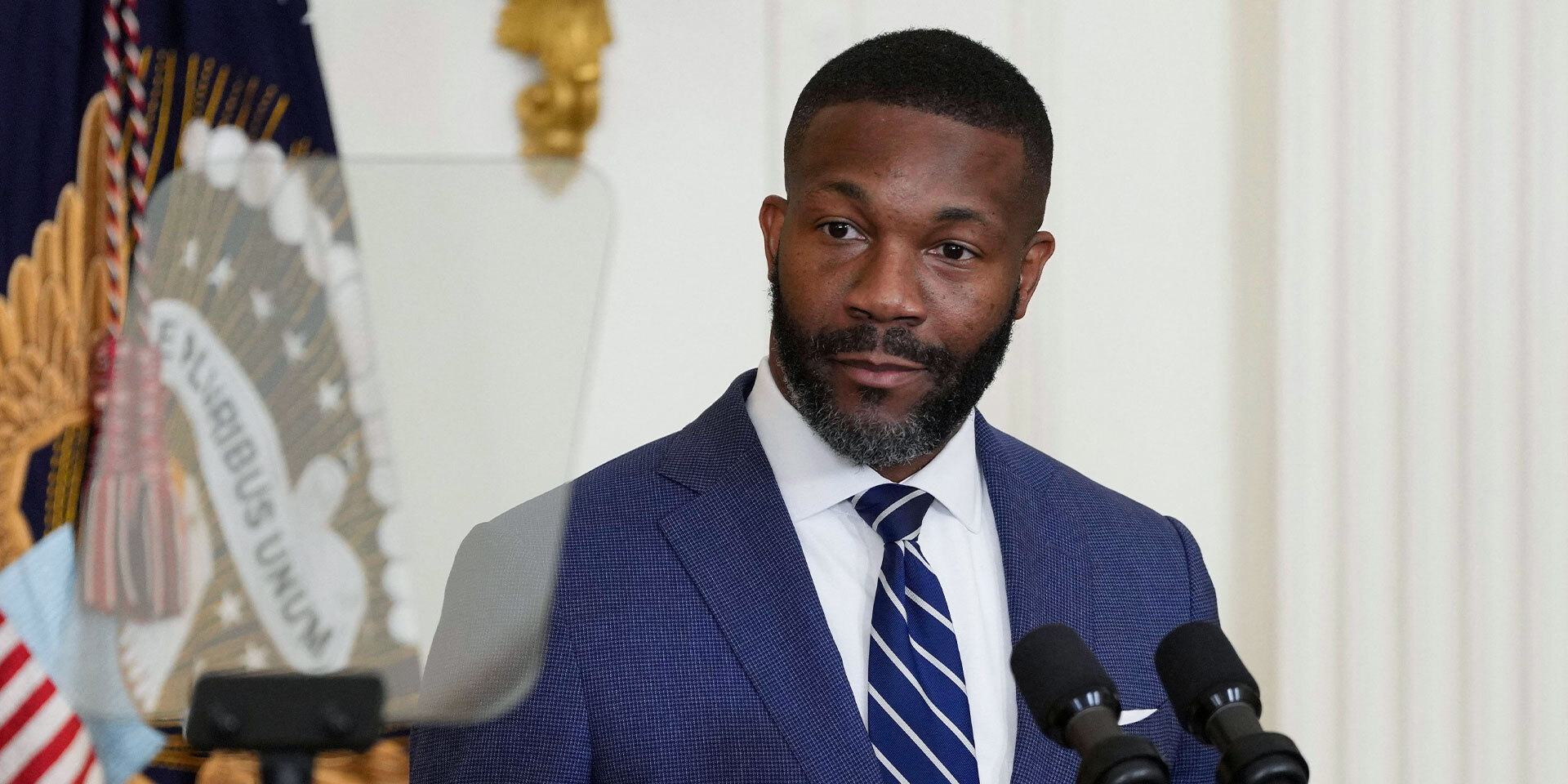
This is where having Black representation in government really makes a difference, explained Randall Woodfin, the mayor of Birmingham, Alabama, who recently won reelection to office and was endorsed by the SPLC Action Fund in that race.
“A city is only as strong as its lowest quality of life neighborhood, and it turns out, in many of our urban cores, for the lowest quality of life neighborhoods, demographics usually reflect Black and Brown people,” Woodfin said. “Having Black and Brown local officials understand that notion and embrace that notion, you tend to shift resources in an intentional effort to improve everybody’s quality of life.”
Officials who look like their constituents and have walked in their footsteps can recognize the laws and policies that will have the kind of community impact Black constituents need, he said. And they will finally bring investments into neighborhoods that have been mostly ignored.
This isn’t just campaign rhetoric for Woodfin. In this upcoming term, he’s committed to strengthening the Birmingham Promise. The local nonprofit offers graduates from Birmingham City Schools tuition assistance to attend in-state public universities, as well as internship opportunities to gain work experience. Many Black and Brown students in his city would otherwise be unable to afford to continue their education.
“It’s transformational for their life. It relates to not only being educated, but becoming everything we want to see in the community: being gainfully employed; being a homeowner; taking care of their families,” he said. “This is not charity work. This is full economic mobility.”
What can be done to increase Black political power at the local level?
Making investments in programs like Birmingham Promise can show residents the tangible impacts of electing strong leaders at the local level. But it can still be a struggle to convey just how important these elections are.
“Your everyday life — your trash being picked up on time, opportunities around education for your kids, job creation, how your neighborhood looks — this is all local,” Woodfin said. “The most impactful thing related to changing your life is local politics.”
But voting trends do not reflect this reality. Voting tends to dip in non-presidential years and can trail off as elections get more and more local. Racial gaps in turnout can also be a significant issue. The 2024 general election saw the largest gap between white and Black voter turnout in Alabama than at any point since at least 2008, according to the Brennan Center.
But there is reason for hope, and that may be thanks to the federal government’s mishandling of many issues important to voters, including the economy.
“The Trump presidency has really energized people to get on the field and get involved,” Johnson said. “So you’ve seen a lot of candidates … stepping up because they want to do their part to help.”
For people eager not only to participate in elections, but actually run for office, Johnson advises getting involved with neighborhood groups and government associations. He served on the Savannah City Council for 16 years before running for mayor, which helped him understand how the laws, policies and budgets work in local government.
“Government is not simple or easy,” he said. And public service can also be very difficult and time-consuming. But mayors can do better when they’ve put in the time to “understand how the sausage is made.”
That doesn’t necessarily mean waiting your turn for a leadership role or waiting for somebody to pass the baton to you. Woodfin said that if you want to lead, you have to go out into the community and work for that role.
“Have your ambition be balanced with purpose,” he said, “and have a vision and plan so you can execute on it, not just to win the campaign, but to govern for the people you want to represent.”
Image at top: Birmingham, Alabama, Mayor Randall L. Woodfin appears at the White House to discuss gun violence on Sept. 26, 2024. (Credit: Chris Kleponis/Alamy)